

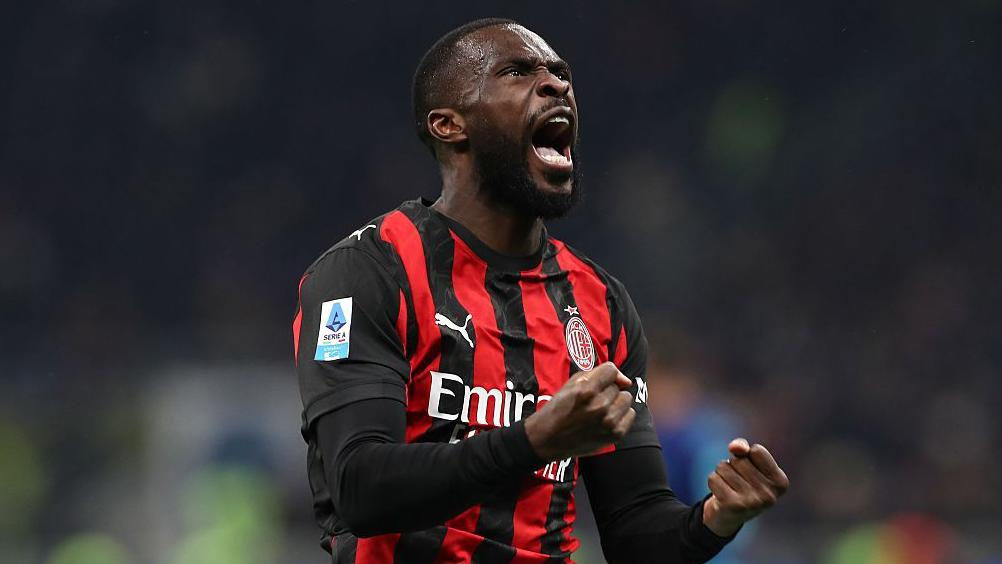
 Photo Credit; Getty Images
Unknown to most, Fikayo Tomori's full name is Oluwafikayomi Oluwadamilola Tomori.
In Milan, like in most places during his footballing career, they stick to calling him "Fik".
But the story behind Tomori's full name is worth telling.
"My parents are Nigerian so the names come from their tribes," Tomori tells BBC Sport.
"Each tribe has a sentence which is shortened to a name, so Oluwafikayomi means 'God has filled me with joy' and Oluwadamilola means 'God has filled me with wealth'.
This season, there is plenty of joy so far in Milan.
Under Massimiliano Allegri, AC Milan are second in Serie A, only one point behind Inter Milan and with eyes set on winning a first Scudetto since 2021-22.
Back then, Milan ended an 11-year wait for the title. This season the Rossoneri have lost only once in the league.
It is a stark difference from last season, when they lost 11 matches and finished eighth - their worst league finish in a decade.
"We all came back in the summer with a point to prove, individually and collectively. We have to attack the season and get back in the Champions League," says Tomori, who turned 28 last week.
Under Allegri, playing in a three-man defence has allowed the centre-half to thrive.
"Physically it's the best I've felt," Tomori says. "Part of that is knowing where I have to be on the pitch. It's helped me a lot when it comes to reading the game.
"It's a simple thing, but there's no need to over-extend yourself as a defender. It's about running smarter, not harder."
It is nearly six years since Tomori, who grew up supporting Arsenal, made the leap and left Chelsea, where he came through the ranks. "I wanted to stabilise my career," he says.
Tomori has made 194 appearances for Milan since and by now is fluent in Italian and completely immersed in the culture.
"The accent comes naturally too," he says. "If I don't speak in the accent or switch it on, they won't understand.
"It's a different way of life, but the biggest difference is how we train. In Italy it's a lot more focus-based in terms of how we'll play, whereas in England training can be more physical and intense.
"When I was growing up there was a stereotype that English players didn't go abroad, but there's quite a few now, which shows we can go abroad and adapt to a different way of living too."