

Photo Credit: Getty Images
There is a secretive global industry worth billions of dollars every year, powered not by professors or students, but by “shadow scholars” – ghostwriters who produce essays, dissertations, and academic papers for students across the world.
In Kenya, this underground trade thrives. An estimated 40,000 writers in Nairobi alone are producing academic work that students in the UK and beyond pass off as their own. These writers are highly educated, ambitious, and tech-savvy. Many graduated with top degrees but found themselves locked out of Kenya’s limited job market. Instead, they log onto essay-writing platforms, bidding for assignments that can range from mechanical engineering and quantum physics to Jane Austen and Ho Chi Minh.
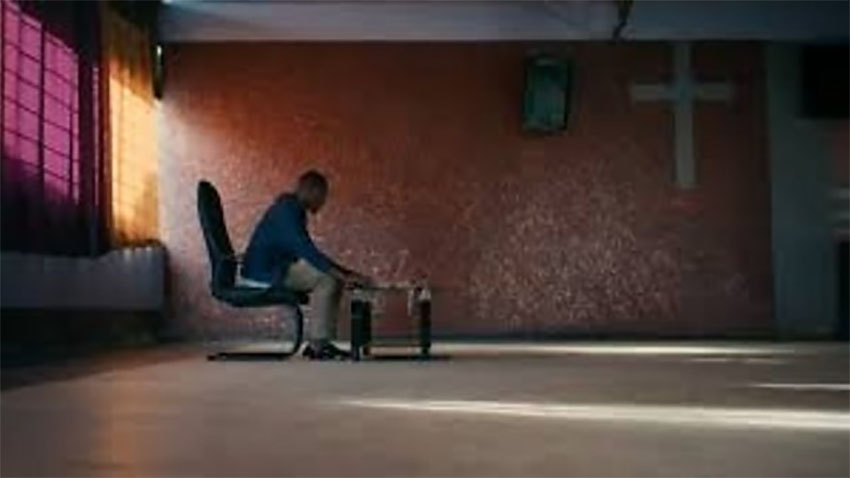
A new Channel 4 documentary, The Shadow Scholars, brings this hidden world into the open. Guided by Kenyan-born Oxford sociologist Patricia Kingori, the film shines a light on the young people who keep this industry alive. Kingori was struck by their extraordinary skills. “It’s like entering an Olympic village,” she said. “You’re able to write an essay, on a subject you’ve learned nothing about, in six hours? How are you able to do this?”
For the writers, speed and precision are everything. They work through the night to meet deadlines without the luxury of extensions or excuses. Mercy, a graduate and mother, sometimes tackles two different subjects in a single night with only three hours’ sleep. Chege, an early pioneer of academic ghostwriting in Kenya, has used his earnings to fund his own education, build his parents a house, and support his sister through university.
Yet, despite their brilliance, these writers remain invisible. Many create fake profiles with Western names and photos to reassure clients that the essays are “authentic.” Kingori notes how the industry feeds off prejudice: “There’s this idea that this level of intellect could not be coming from Kenya. Nothing tells you that the writer is in Nairobi.”
The financial rewards can be significant. The best-paid shadow scholars earn as much as doctors in Nairobi, with prices ranging from under £1 a page to thousands for a dissertation. Adrian, one of the writers featured in the film, has completed work for students at Oxford and Leeds. Asked about the ethics, he replied: “For me, I’m gaining knowledge. I would pass that question to the client.”
The students on the receiving end face their own pressures. Kate, a US student, admitted she sold explicit photos to afford $300 for ghostwritten essays because she feared disappointing her parents, who invested their savings into her costly education.
Essay mills were officially banned in England in 2022, but the problem persists. According to contract cheating expert Thomas Lancaster of Imperial College London, students are still paying for ghostwriting services even as generative AI reshapes the industry. Some now use AI tools for first drafts before turning to human writers to edit and disguise the content.
For Kingori, the issue runs deeper than cheating. It exposes global inequalities in education and opportunity. “Power makes itself invisible so we don’t question whether things should be the way they are,” she said. “It enrages me. If the world was fair, these scholars would be able to operate on the world stage as themselves.”
The Shadow Scholars will premiere in select UK cinemas on 16 September and air on Channel 4 on 24 September at 10pm.