Photo Credit: Getty Images
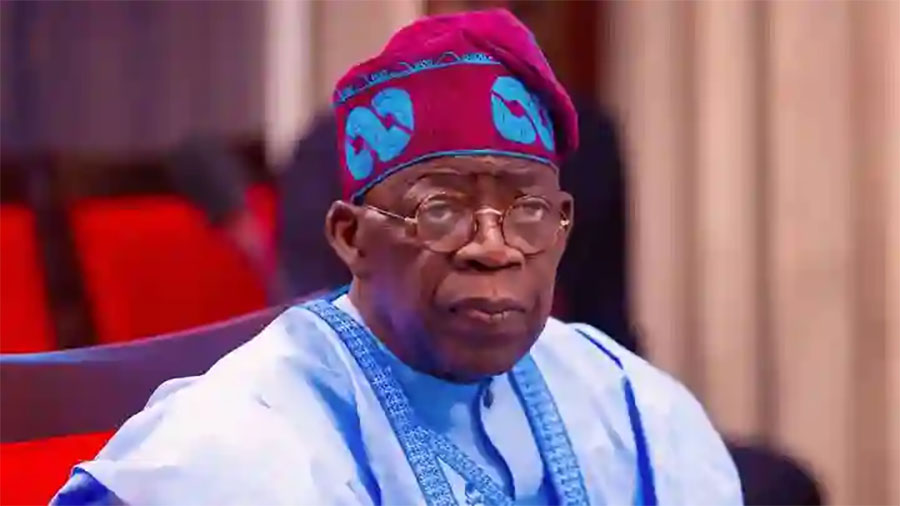
Nigeria has entered a new phase of national security strategy after President Bola Tinubu declared a countrywide emergency aimed at addressing escalating violence across multiple states. In a televised address, the president announced sweeping reforms including a significant expansion of police personnel. The directive authorizes the recruitment of twenty thousand additional officers, raising the national police force to fifty thousand. Tinubu also ordered the reassignment of officers currently serving on VIP protection duties, instructing that they undergo retraining before deployment to conflict prone regions. The government further approved the use of National Youth Service Corps camps for accelerated training.
The Department of State Services received authorization to deploy specially trained forest guards and expand its workforce to confront armed groups operating from remote areas. Tinubu's announcement follows a series of attacks in states such as Kebbi, Zamfara, Niger, Borno, Yobe and Kwara, where dozens of civilians were recently killed or abducted. In acknowledging the severity of the situation, he noted the rescue of twenty four schoolgirls in Kebbi and thirty eight worshippers in Kwara, pledging to secure the release of all remaining hostages including abducted students in Niger State.
The president called on the National Assembly to consider legislation permitting individual states to establish their own police forces, arguing that decentralized security structures may be better equipped to respond to localized threats. Tinubu also urged religious institutions to enhance protective measures during gatherings and encouraged herder associations to embrace ranching practices to reduce clashes with farming communities. He appealed for the surrender of illegal arms, stressing the need for collective responsibility in restoring stability.
Nigeria continues to grapple with a complex security landscape marked by Islamist insurgency, armed banditry and intercommunal conflicts that have displaced millions. Tinubu paid tribute to security personnel who have died in service, including Brigadier General Musa Uba, and asserted that the government's restraint should not be interpreted as weakness. His directives reflect an attempt to strengthen state capacity amid public concern about deteriorating conditions. As authorities implement the measures outlined in the national emergency, the success of the initiative will depend on coordination between federal agencies, local communities and regional leaders seeking enduring solutions to persistent violence.